Probiotic Yogurt Maker: Expert Insights for Long-Term Use
Top Yogurt Making Machine: Make Exceptional Health Yogurt With Our Advanced Probiotic Yogurt Maker
The growth of homemade yogurt has transformed how individuals approach their wellness and health. A top yogurt making machine offers precision and versatility in creating probiotic-rich yogurt. Users can experiment with different ingredients and flavors, tailoring the yogurt to their specific dietary needs. Understanding the key features of these machines is crucial for making an informed choice. What are the best choices available, and how can one utilize them to elevate their yogurt-making experience?
Perks of Home-Made Yogurt
Even though lots of people appreciate store-bought yogurt, homemade yogurt presents distinct advantages that can improve both health and enjoyment. One significant perk is the ability to control ingredients, enabling individuals to avoid preservatives, artificial flavors, and added sugars. This control creates a more nutritious product, customized to certain dietary needs or preferences.
Additionally, homemade yogurt can be prepared using a variety of milk types, including full-cream, skim, or plant-based options, catering to diverse lifestyles and nutritional requirements. The fermentation process in homemade yogurt cultivates beneficial probiotics, which can boost gut health and digestion.
Another advantage is cost-effectiveness, as making yogurt at home is usually more budget-friendly than buying premium brands. Lastly, the satisfaction of creating yogurt from scratch can improve the overall experience, making it not just a food item but a rewarding culinary pursuit. In summary, homemade yogurt blends health benefits with personal satisfaction and customization.
Key Features to Look for in a Yogurt Maker
When picking out a yogurt maker, multiple key features can substantially elevate the yogurt-making experience. First, temperature control is crucial; a specific temperature setting guarantees optimal fermentation for creamy yogurt. In addition, a built-in timer lets users to watch the fermentation process simply, preventing fermentation issues.
One more significant aspect is the capacity of the yogurt maker. Based on family size and consumption, a larger capacity may be preferred, accommodating different batch sizes. Flexibility is also advantageous; some models permit various kinds of yogurt, including Greek or non-dairy alternatives.
Cleaning convenience shouldn't be ignored, as removable components and dishwasher-safe pieces streamline upkeep. Additionally, power consumption is an important factor, permitting users to create yogurt without substantially influencing energy expenses. When considering these factors, people can make an educated selection that fits their yogurt-making needs.
Leading Yogurt Making Machines Evaluated
With the increasing popularity of homemade yogurt, various yogurt making machines have appeared on the market, with each delivering distinctive features and capabilities. The Yogurt Maker Pro distinguishes itself through its advanced temperature control and customizable settings, enabling users to create various yogurt textures and flavors. In contrast, the Easy Yogurt Machine is known for its easy-to-use interface and compact design, making it perfect for small kitchens.
The Multi-Function Yogurt Maker delivers versatility by permitting users to prepare yogurt, cheese, and even kefir, attracting those who appreciate experimenting with dairy products. For those looking for a budget-friendly option, the Basic Yogurt Maker provides essential functions at an affordable price, without compromising on quality. Each of these machines caters to different preferences and needs, making certain that everyone can find a suitable option for making delicious homemade yogurt.
Complete Guide to Preparing Probiotic Yogurt
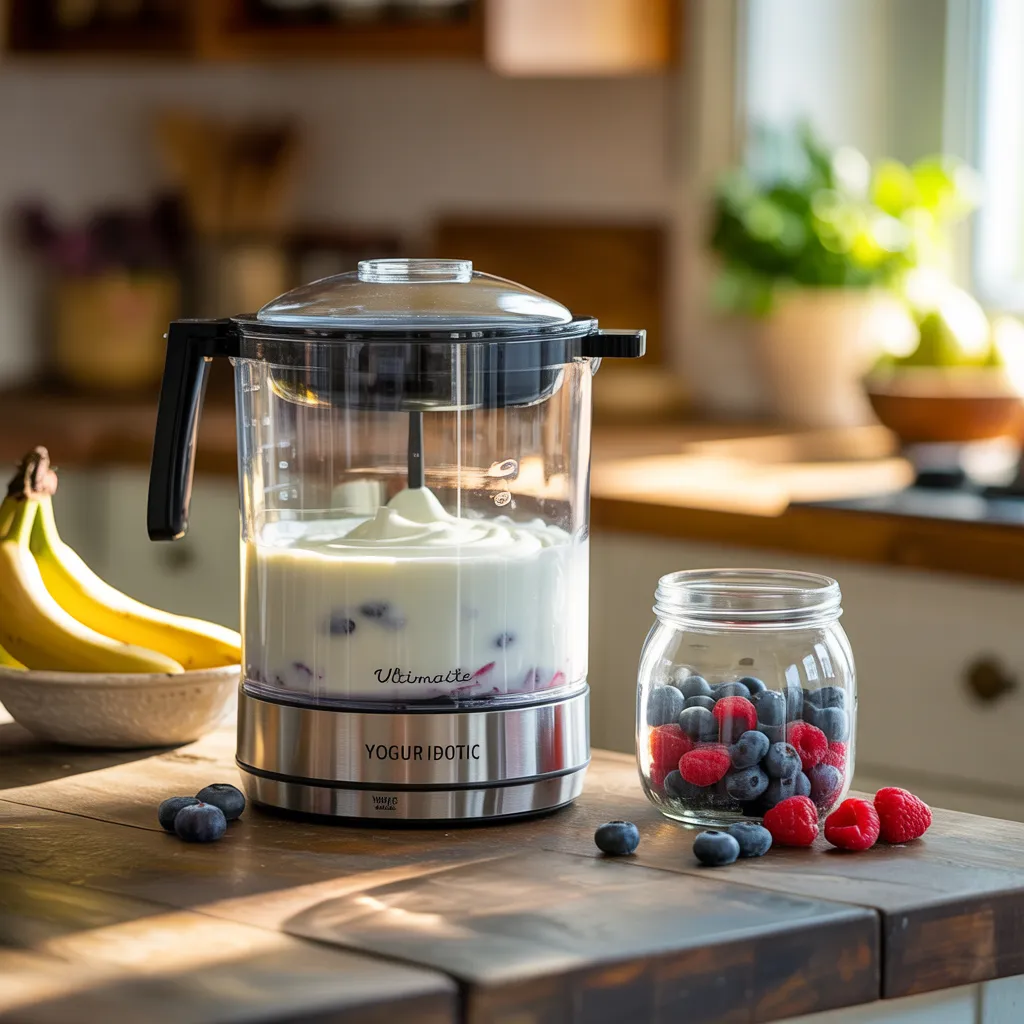
To create probiotic yogurt at home, one must follow a clear-cut process that secures the cultivation of beneficial bacteria. Initially, select premium milk, either whole or low-fat, and heat it carefully to about 180°F to eliminate any unwanted bacteria. After cooling the milk to around 110°F, add a starter culture containing live probiotic cultures, ensuring it's thoroughly mixed. Transfer the mixture into a yogurt maker, maintaining a temperature of approximately 110°F for several hours, typically 6 to 12, depending on desired thickness and tanginess. Once fermentation is complete, gently transfer the yogurt to storage containers and refrigerate it to stop the fermentation process. This cooling also improves the yogurt's flavor and texture. The Ultimate Probiotic Yogurt Maker result is a rich, probiotic-rich yogurt, ready to be eaten plain or as a base for various dishes. Following these steps guarantees a successful homemade probiotic yogurt experience.
Suggestions for Tailoring Your Yogurt Recipes
Personalizing yogurt recipes enables a delightful exploration of flavors and textures, accommodating individual preferences. To begin, one can explore different milk types, such as cow, goat, or plant-based alternatives, to obtain different creaminess levels. Adjusting the fermentation time can also impact the tanginess; longer fermentation yields a sharper taste, while shorter times produce a milder flavor.
Including sweeteners including honey, agave, or maple syrup can improve sweetness without sacrificing health benefits. In addition, adding fruits, nuts, or spices, including vanilla or cinnamon, can introduce interesting flavors and textures. For a probiotic boost, consider blending in different strains or prebiotics.
Lastly, portioning yogurt into jars prior to flavoring allows for personal customization in each serving, ensuring everyone can savor their preferred combination. By following these steps, yogurt aficionados can create one-of-a-kind, healthy, and delicious yogurt tailored to their tastes.
Frequently Asked Questions
Is It Possible to Use Non-Dairy Milk in a Yogurt Maker?
Absolutely, non-dairy milk can be used in a yogurt maker. Nonetheless, it is essential to pick suitable non-dairy choices, like almond or coconut milk, and to add a suitable yogurt starter for effective fermentation.
What Is the Fridge Life of Homemade Yogurt?
Homemade yogurt generally remains fresh roughly one to three weeks when refrigerated. Its shelf life relies on proper storage and starting freshness. Observing any changes in odor or consistency can indicate spoilage, demanding careful inspection.
What's the Optimal Temperature for Fermenting Yogurt?
The perfect temperature range for yogurt fermentation typically falls between 110°F to 115°F (43°C to 46°C). This temperature range encourages the growth of beneficial bacteria, producing a creamy texture and tangy flavor characteristic of homemade yogurt.
Can Yogurt Makers Be Used for Other Fermented Foods?
Indeed, yogurt makers are suitable for multiple fermented foods like kefir, cheese, and also fermented vegetables. The temperature control capabilities make these devices versatile instruments for home fermentation lovers pursuing varied culinary experiments.
Is Using Expired Yogurt as a Starter Culture Safe?
Employing expired yogurt as a starter culture is typically not suggested. While some useful bacteria may survive, the risk of harmful bacteria contamination increases. Fresh yogurt guarantees a more reliable and more consistent fermentation process for making yogurt.